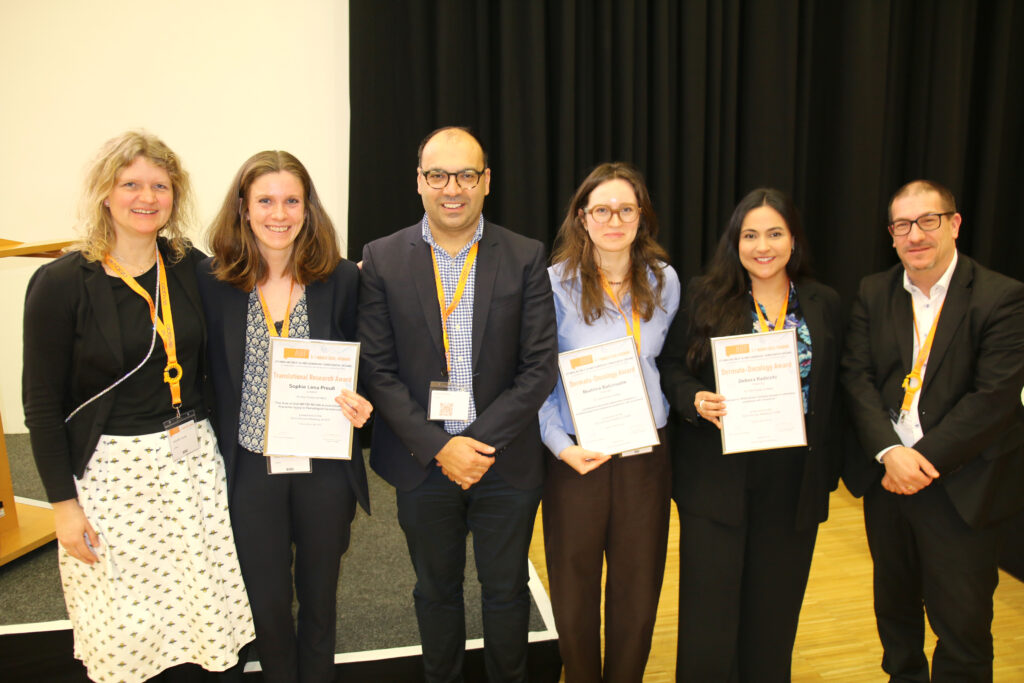
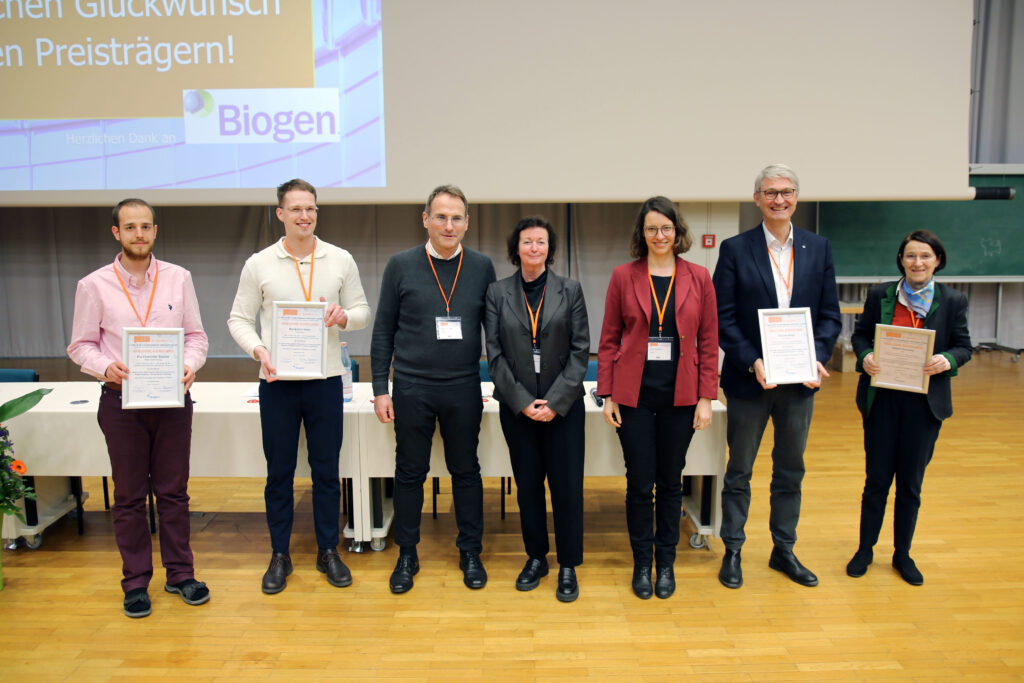
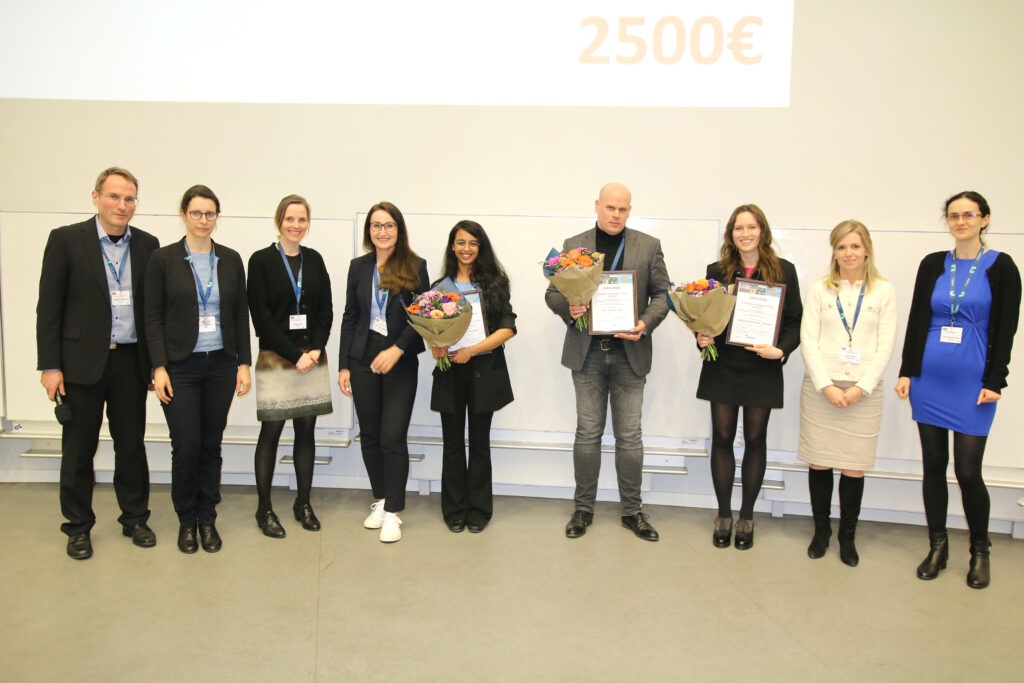
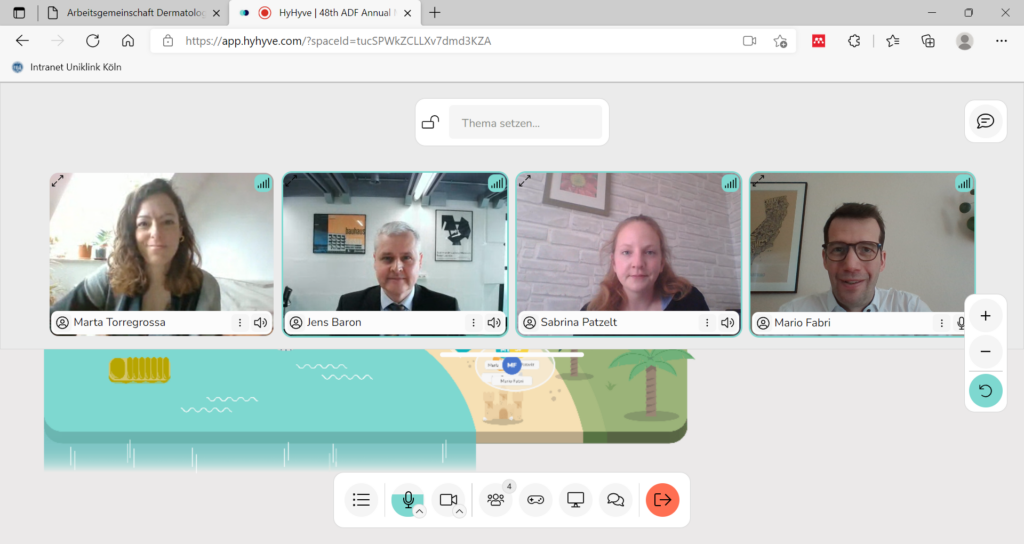
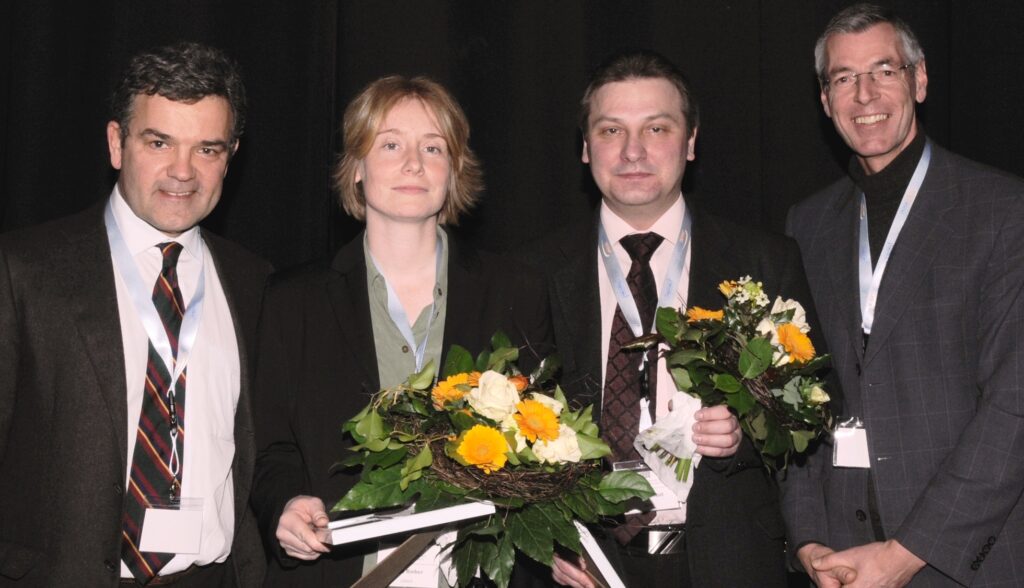
Translational Research Award
These prizes will be awarded to researchers in the field of Dermatology who are attempting to transfer insights gained in experimental basic research into clinical applications. Junior scientists who present outstanding and innovative work in this field are preferably considered.
An independent scientific advisory board consisting of former ADF board members, clinic directors and leader of specific centers within dermatological clinics will select and nominate the awardees.
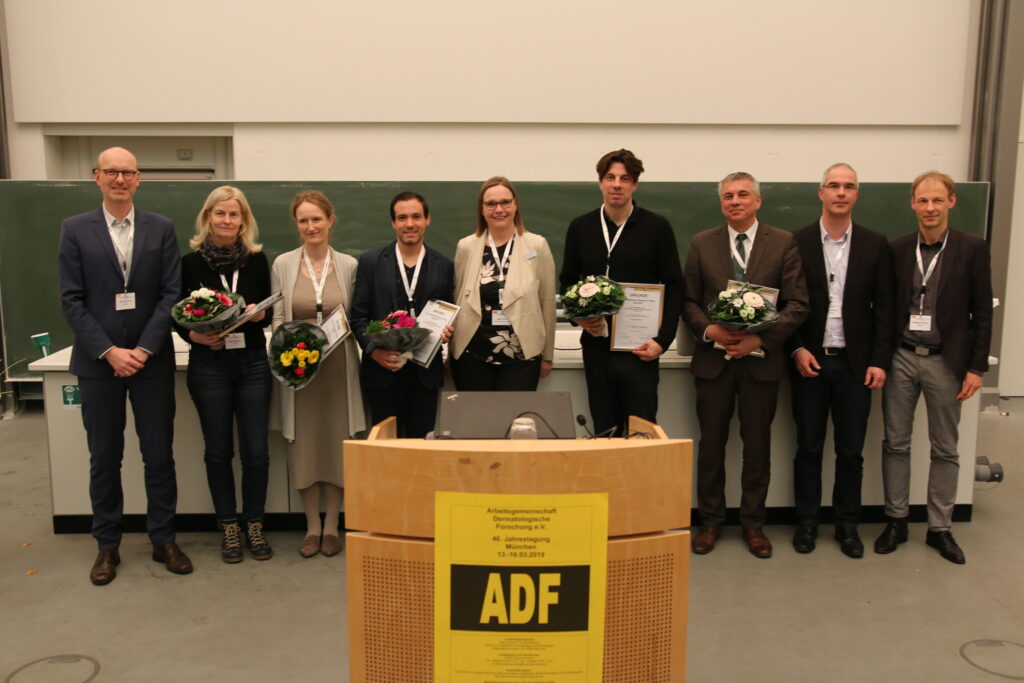
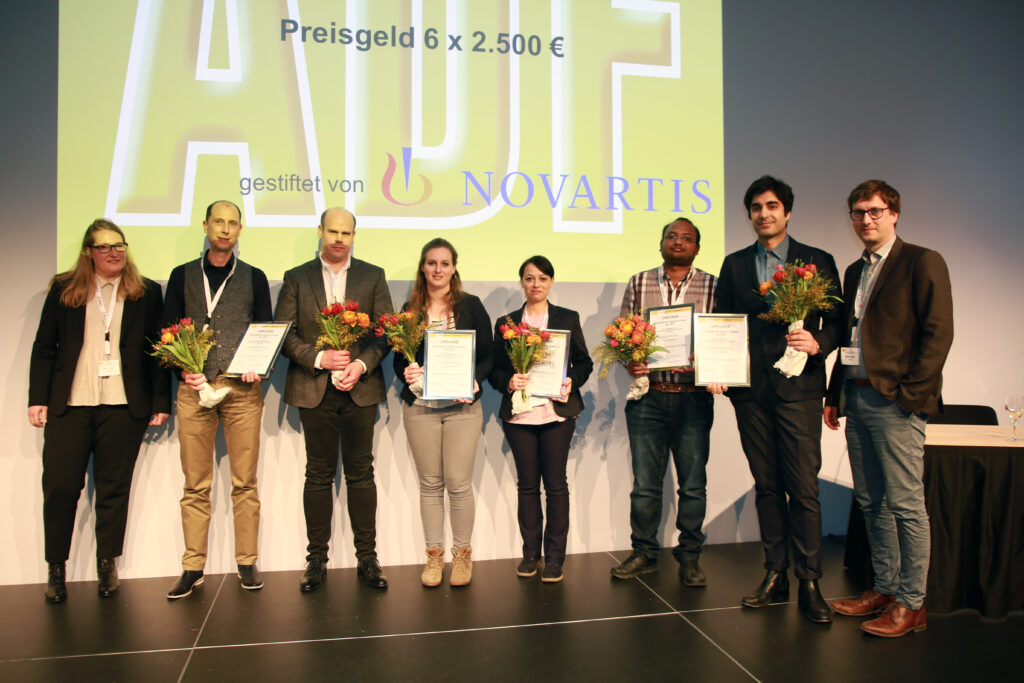
The Translational Research prizes will be awarded at the ADF Annual Meeting to researchers or clinician scientists (first or senior authors) who performed outstanding work in the field of Translational Research. The Translational Research prizes will cover different focus areas of dermatological research.
The prizes, which are awarded in different disciplines of dermatological research, will be awarded to first / senior authors during the ADF anniversary, which will carry out outstanding work in this field. Each application for the Translational Research Prize is reviewed by a number of members of the Board of Trustees, with the appraisers assigned to the individual applications in the batch process (to the exclusion of a possible bias). Subsequently, each reviewer evaluates the assignments assigned to him using a standardized point system according to the innovation and originality of the submitted work, their relevance and their possible potential for translation into clinical application. The work with the highest score in each category is awarded, whereby the division of the prizes is possible for the same number of points.
All contributions to clinical translation research that were submitted as an abstract on time to the ADF Annual Meeting will be considered.
Kuratorium:
- PD Dr. med. Manfred Kneilling (Chair)
- Prof. Dr. med. Patrick Brunner
- Prof. Dr. med. Claudia Günther
- Prof. Dr. med. Dr. sc. nat. Barbara Meier-Schiesser
- PD Dr. med. Oana-Diana Persa
- PD Dr. med. Christian Posch
- PD Dr. rer. nat. Verena Raker
- Dr. med. Artem Vorobyev
Past awardees of the Translational Research Award
TRANSLATIONAL RESEARCH AWARD 2026
P007:
“The Role of Anti-BP180 NC16A Autoantibodies in Placental Injury in Pemphigoid Gestationis”
Sophie Lena Preuß, Lübeck
TRANSLATIONAL RESEARCH AWARD 2025
P009:
“Host-Microbiome interplay in early life determines atopic dermatitis development in children”
Yacine Amar, München
P112:
„Multi-Omics Skin Disease Atlas for Accurate and Rapid AI-Driven Clinical Decision Making“
Pia-Charlotte Stadler, München
P049:
„A transcriptome atlas of inflammatory skin diseases allows disease stratification based on cytokine signatures“ Benjamin Klein, Ann Arbor
P134:
„Overactivation of CdC42 Kinase Impairs the Cytotoxic Function of NK Cells from Old Adults Enhancing Accumulation of Senescent Fibroblasts in Aging Skin – A Successful Rescue by the CdC42 Inhibitor CASIN“
Albert Koroma, Ulm
TRANSLATIONAL RESEARCH AWARD 2024
P053:
“The antimicrobial peptide RNase 7 induces the expression and secretion of the pro-inflammatory cytokine IL-6 by keratinocytes”
Shruti Chopra, Hannover
P189:
„Overexpression of DIRAS1 in mouse skin reduces tumorigenesis during multi-stage chemical carcinogenesis“
Paula Meisel, Vienna
P217:
„Cutaneous squamous cell carcinoma patients harbour keratin 14 reactive T cells“
Beatrice Balciunaite, Tuebingen
TRANSLATIONAL RESEARCH AWARD 2023
TRANSLATIONAL RESEARCH AWARD 2022
P080:
“Imiquimod perturbs amino acid metabolism in human CD8+ T cells”
Luisa Bopp, Cologne
P020:
„The transcription factor CEBPB drives lichenoid skin inflammation by mediating apoptosis, IFN-? signaling and favoring the secretion of type 1-related inflammatory factors“
Menatullah Mubarak, Munich
P107:
„Adoptively transferred CD4+ T cells control established melanomas through indirect antigen-specific activation in the tumour microenvironment“
Bastian Kruse, Magdeburg
TRANSLATIONAL RESEARCH AWARD 2022
P050:
“Nectin-1 determines the susceptibility of malignant melanoma to oncolytic herpes simplex virus in vitro and in vivo”
Barbara Schwertner, Regensburg
P070:
„Local accumulation of iron in the skin affects crosstalk and phenotypes of immune and tissue cells“
Marta Torregrossa, Leipzig
P129:
„PDE4 inhibition improves clinical lesions in a novel immunization-induced mouse model of mucous membrane pemphigoid“
Sabrina Patzelt, Lübeck
TRANSLATIONAL RESEARCH AWARD 2021
P041:
“Tocilizumab treatment in patients with Schnitzler syndrome: an open-label proof-of-concept study”
Hanna Bonnekoh, Berlin
P063:
„Artificial neural networks and pathologists recognize basal cell carcinomas based on different histological patterns“
Susanne Kimeswenger, Linz
P089:
„Development of a Pathogenesis-Based Therapy for Peeling Skin Syndrome (PSS type 1)“
Frederic Valentin, Muenster
P098:
„Immunological patterns and therapeutic consequences of chronic inflammatory skin diseases“
Peter Seiringer, Munich
P137:
„Autoantigen generation of the HLA-C*06:02-mediated autoimmune response against melanocytes in psoriasis is ERAP1-dependent“
Akiko Arakawa, Munich
P205:
„STAT5 is a therapeutically targetable vulnerability in leukemic cutaneous T-cell lymphoma“
Saptaswa Dey, Graz
TRANSLATIONAL RESEARCH AWARD 2020
No Award
TRANSLATIONAL RESEARCH AWARD 2019
P040:
“Disulfiram efficiently induces cell death in BRAF Wild-Type melanoma cells through a massive induction of reactive oxygen species”
Francisco Meraz-Torres, Tuebingen
P068:
„High fat diet exacerbates skin inflammation independent of obesity: Saturated fatty acids as key players“
Anja Saalbach, Leipzig
P055:
„Clinical response to JAK inhibition in patients with familial chilblain lupus and TREX1 mutation“
Nicole Zimmermann, Dresden
P 016:
„Double-edged role of IL-33 in human skin mast cells: reduced degranulation, strengthened proliferation and heightened histamine synthesis through p38 activation“
Magda Babina, Berlin
P130:
„Effect of phosphodiesterase-4 inhibition on skin and mucosal lesions in experimental anti-laminin 332 mucous membrane pemphigoid“
Sabrina Tofern, Luebeck
P046:
„IL-17E (IL-25) enhances innate immune responses during murine skin inflammation“
Luisa Senra, Genf

TRANSLATIONAL RESEARCH AWARD 2018
“Therapeutic inhibition of IL-17 leads to clinical remission of lichen planus”
Farzan Solimani, Marburg
„The secretome of skin cancer cells influences the transcriptome of keratinocytes“
Enrica Zanuttigh, Munich
„Rationale for anti-IL-17A treatment in bullous pemphigoid“
Lenche Chakievska, Luebeck
„LEKTI is substrate of Transglutaminase-1: implication for a therapeutic topical replacement strategy for Netherton Syndrome“
Henning Wiegmann, Muenster
„Topical treatment with a novel kappa-opioid receptor agonist ameliorates atopic dermatitis“
Maria Schneeweiß, Muenster
„Inhibition of melanoma cell derived prostaglandin E2 amplifies T- cell receptor signaling and shows clinical efficacy in combination with anti-PD1 therapy“
Tobias Sinnberg, Tuebingen
TRANSLATIONAL RESEARCH AWARD 2014
“Beta-endorphin – an emerging antifibrotic neuropeptide”
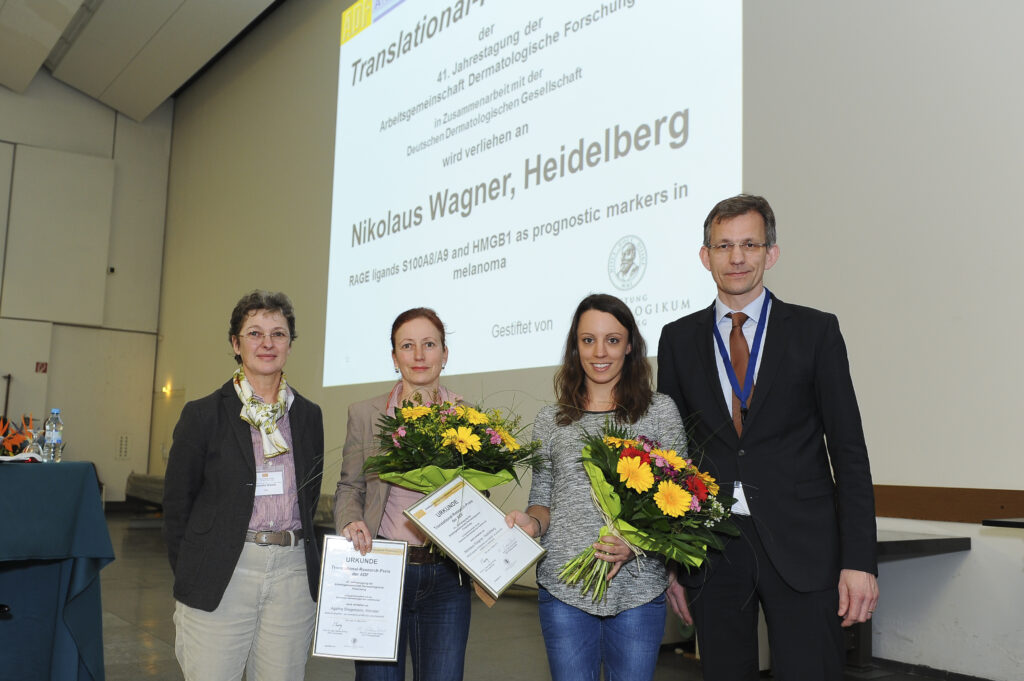
Agatha Stegemann, Muenster
“RAGE ligands S100A8/A9 and HMGB1 as prognostic markers in melanoma”
Nina Wagner, Heidelberg
TRANSLATIONAL RESEARCH AWARD 2012
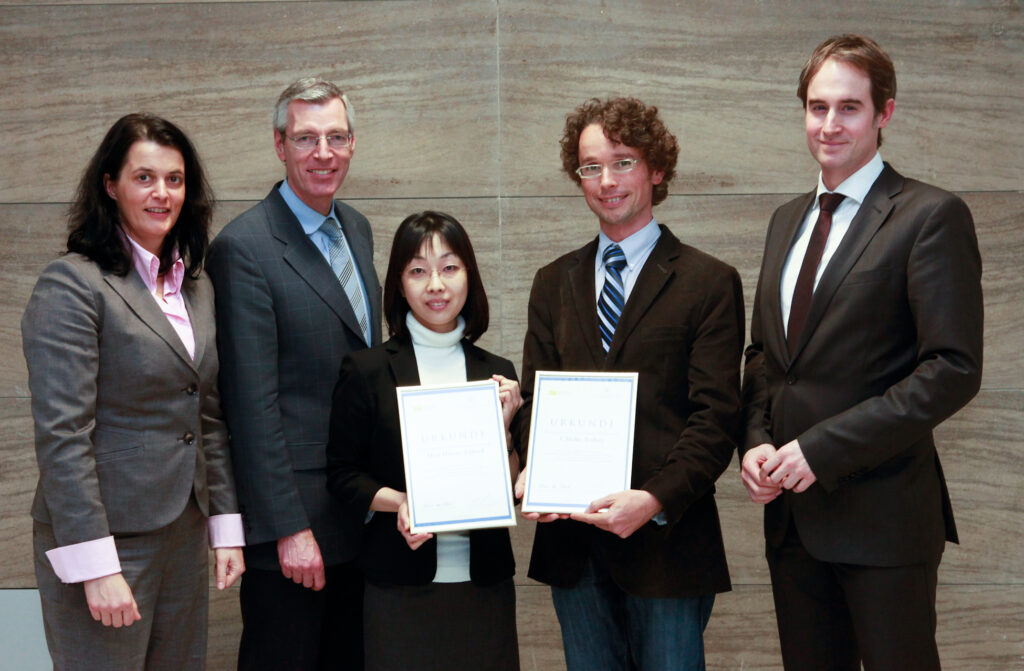
“Developing chemotherapeutics which selectively disable the actin cytoskeleton of tumor cells”
Justine Stehn, Sydney
“Enzymatic autoantibody glycan hydrolysis alleviates autoimmunity against type VII collagen”
Misa Hirose, Luebeck
TRANSLATIONAL RESEARCH AWARD 2010
“Modulation of experimental epidermolysis bullosa acquisita towards an improved phenotype by initiating the production of non-pathogenic autoantibodies”
Katja Bieber, Lübeck
Robert Sabat, Berlin
TRANSLATIONAL RESEARCH AWARD 2008
TRANSLATIONAL RESEARCH AWARD 2006
Cell therapy restores skin function in an immunocompetent mouse model for dystrophic epidermolysis bullosa”
J. S. Kern, Freiburg
„Induction of IL-10 producing suppressor T cells by non-pathogenic gram-negative bacteria clears atopic dermatitis”
TRANSLATIONAL RESEARCH AWARD 2006
“Contact hypersensitivity is significantly increased in cannabinoid receptorknockout mice: Evidence for the involvement of the endogenous cannabinoidsystem in the regulation of cutaneous immune responses”
E. Gaffal, Bonn
„High-throughput tissue microarray analysis of MTAP expression inmelanocytic skin tumors”